If you’ve nailed your dough, built a great sauce, and fired up the oven, the next big question is simple: what cheese goes on pizza? The classic answer is mozzarella, but the better answer is that the best cheese for pizza depends on the style you’re making. Some cheeses melt into silky pools, some give you dramatic stretch, some brown beautifully, and some are better added after baking for a sharp, salty finish. That’s why choosing cheese matters. It affects flavour, texture, browning, moisture, and the overall character of the pizza.
The good news is that pizza gives you room to play. Traditional styles often rely on specific cheeses, but there’s no rule saying you can’t experiment. A Neapolitan pizza wants a different cheese approach than a Detroit-style pan pizza, and a white pie plays by different rules again. Once you understand how each cheese behaves, it becomes much easier to decide what belongs on your pizza. For more ideas and inspiration, explore Gozney’s recipes.

Which Cheese Goes Best with Which Pizza?
Choosing the best cheese for pizza isn’t just about flavour—it’s about how that cheese melts, stretches, browns, and works with the style of pizza you’re making. Some cheeses are ideal for classic Neapolitan or New York-style pizzas, while others shine on Detroit-style pans, white pies, or bolder topping combinations. Use the table below as a quick guide to see what cheese goes on pizza and which options pair best with each style.
|
Cheese |
Properties |
Best pizza styles |
|
Mozzarella |
Mild, creamy, stretchy, melts evenly |
Neapolitan, Margherita, New York-style, most classic pizzas |
|
Provolone |
Lightly smoky, mild to sharp, clean melt |
Italian-American pizzas, NY-style blends, cheesesteak pies |
|
Brick Cheese |
Buttery, tangy, rich, caramelises well |
Detroit-style, pan pizzas |
|
Parmesan & Pecorino |
Hard, salty, savoury, umami-rich |
Neapolitan, white pies, Roman-style, pepperoni pizzas, great as a finishing sprinkle |
|
Blue Cheese |
Bold, tangy, creamy or crumbly |
Buffalo chicken, spicy-sweet pizzas, pear or bacon pies |
|
Feta |
Salty, crumbly, softens but doesn’t fully melt |
Greek-style, veggie pizzas, Mediterranean-inspired pies |
|
Ricotta |
Light, creamy, fluffy, dolloped |
White pizzas, mushroom pizzas, spicy pies |
|
Cheddar |
Sharp, rich, browns fast |
Cheeseburger pizzas, taco pizzas, pan pizzas |
|
Goat Cheese |
Tangy, creamy, softens into pockets |
Gourmet veggie pizzas, spinach, mushroom, honey-topped pies |
Mozzarella
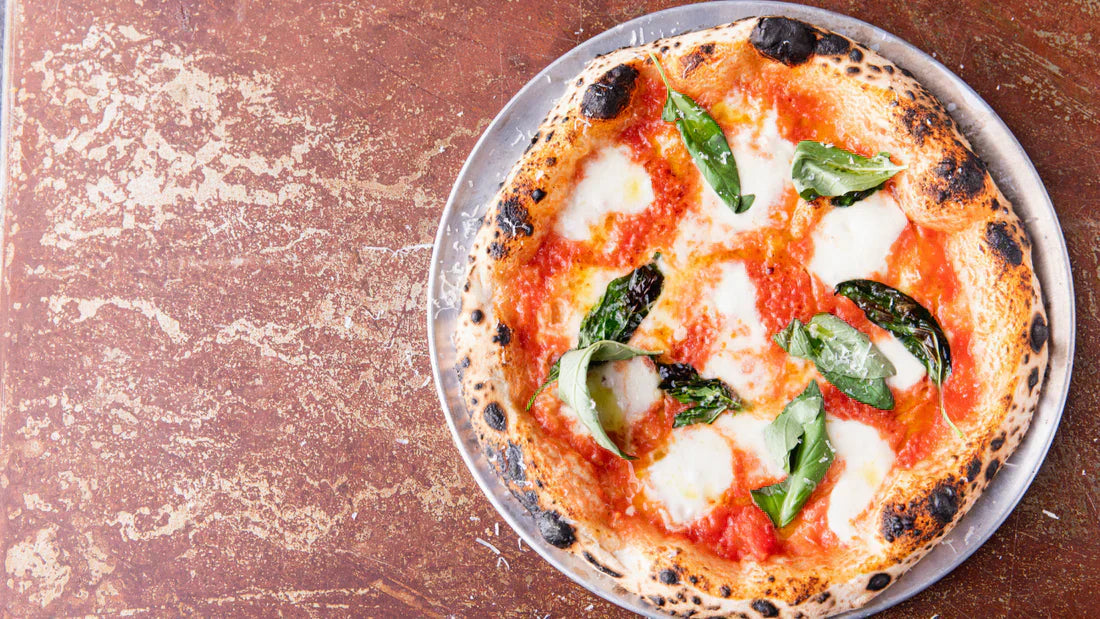
If someone asks what cheese is used on pizza, mozzarella is still the main answer. It’s the most common pizza cheese because it offers the full package: mild flavour, smooth melt, and that classic stretch people expect from a great slice. Fresh mozzarella, including fior di latte and buffalo mozzarella, is ideal for high-heat Neapolitan pizzas because it melts beautifully without browning too aggressively. It gives the pizza a soft, delicate finish that feels light and traditional.
Low-moisture mozzarella is often the best cheese on a pizza for New York-style or home-baked pies because it contains less water and browns more easily. That makes it easier to control, especially in longer bakes. Whole-milk versions are richer, while part-skim versions brown better and hold structure a little more firmly. For the best result, buy it in a block and grate it yourself. Pre-shredded cheese often contains anti-caking agents that can affect the melt.

Provolone
Provolone is a brilliant supporting cheese and sometimes an excellent main cheese, especially in Italian-American pizza styles. It’s a stretched-curd cheese like mozzarella, so it melts well and can still deliver that satisfying cheesy pull. The flavour ranges from mild and buttery to sharper and slightly smoky, which makes it useful when mozzarella alone feels too soft or neutral. For a great example of how different cheeses can work together on a pizza, take a look at this Pizza Quattro Formaggi recipe.
It works especially well in blends, where it adds depth without overpowering the pizza. On New York-style pies, cheesesteak-inspired pizzas, or sausage-and-pepper combinations, provolone gives the cheese layer more character and a slightly richer finish. If you want a pizza that tastes more like an old-school pizzeria slice, provolone is a very smart addition.
Brick Cheese
Brick cheese is the signature cheese of Detroit-style pizza, and it plays a huge role in what makes that style so addictive. It has a buttery, slightly tangy flavour and a rich melt that helps create those famous caramelised edges. As the pizza bakes in a pan, the cheese runs to the sides and crisps against the metal, creating a dark, lacy border packed with flavour.
That edge caramelisation is a defining part of Detroit-style pizza, which is why brick cheese is so closely tied to it. It can be hard to find outside the US, but a blend of low-moisture mozzarella and Monterey Jack can produce a similar effect. If your goal is crispy corners, a thick airy crust, and lots of cheesy browning, brick cheese is one of the best options available.

Parmesan & Pecorino
Parmesan and pecorino are hard, salty, deeply savoury cheeses that usually work best as finishing cheeses rather than the main base. Parmesan is nuttier and a little rounder in flavour, while pecorino is sharper and saltier. Both bring a strong umami punch, which means even a light grating can noticeably improve the pizza. For inspiration on how these bold, savoury cheeses can complement other rich toppings, see this Chicken Parm Pizza recipe.
These cheeses are especially good on white pies, pepperoni pizzas, Roman-style pizzas, and classic Neapolitan pies where they can sharpen the flavour of the tomato, herbs, and mozzarella. Finely grating them over the pizza after baking is often the best move because it preserves their punch and keeps the texture clean. Think of them as the final seasoning that makes every bite taste more complete.
Blue Cheese
Blue cheese is bold, tangy, and rich, so a little goes a long way. Softer blues like gorgonzola melt into creamy pockets, while firmer blues are great crumbled on top. It works especially well with chicken, bacon, pear, caramelised onion, and hot honey, making it a great choice for Buffalo chicken or spicy-sweet pizzas. Why not give our ‘Nduja, Blue Cheese and Hot Honey NY Pizza recipe a go.

Feta
Feta doesn’t fully melt, but it softens beautifully and keeps its crumbly texture. That makes it ideal for Greek-style and Mediterranean-inspired pizzas topped with olives, tomatoes, spinach, herbs, or roasted vegetables. It adds a salty bite and a different texture from mozzarella. Give it a go with our Elotes Pizza recipe or our Whipped Feta & Sausage Pizza recipe.
Ricotta
Ricotta is light, creamy, and best added in dollops rather than spread across the whole pie. It’s perfect on white pizzas, mushroom pizzas, or spicy pies where it adds richness and contrast. Seasoning ricotta with salt, pepper, olive oil, or herbs before using it makes a big difference. For inspiration, try our Roasted Mushroom Pizza Bianca recipe.

Cheddar
Cheddar brings a rich, sharp flavour and browns quickly, which makes it excellent for pan pizzas and more playful American-style combinations like taco or cheeseburger pizza. It doesn’t stretch like mozzarella, so it’s usually best used in a blend rather than on its own. Mild cheddar keeps things balanced, while mature cheddar gives a much stronger flavour.

Goat Cheese
Goat cheese is creamy, tangy, and softens into little pockets when baked. It pairs beautifully with caramelised onions, mushrooms, spinach, honey, and roasted vegetables. It’s especially good on white pizzas or gourmet-style combinations where you want a cheese that adds brightness and character without overwhelming the pie. Give our Goats Cheese & Red Onion Marmalade Pizza recipe a try.
The Best Type of Cheese for a Pizza Oven
The best cheese for pizza depends on your oven and bake style. High-heat ovens usually reward cheeses that can handle intense temperatures without releasing too much water. That’s why fresh mozzarella works so well on Neapolitan pizzas when used carefully, and why low-moisture mozzarella is such a reliable all-rounder for home pizza.
For wood-fired or high-heat gas ovens, keep the topping load lighter and choose cheeses with balanced moisture. For longer bakes in gas or electric ovens, low-moisture mozzarella, provolone, and cheddar blends tend to be easier to manage. If you’re making homemade pizza, the key is matching the cheese to the bake time and not overloading the pie. Gozney’s home pizza ovens make it much easier to achieve professional-level melt and blistering at home.
Summary
So, what cheese goes on pizza? Mozzarella is the classic, but the real answer depends on the style. Neapolitan pizzas love fresh mozzarella, New York-style often prefers low-moisture mozzarella and provolone, Detroit-style is all about brick cheese, and white pies open the door to ricotta, pecorino, parmesan, feta, or goat cheese.
The easiest way to improve your pizza is to think beyond one default cheese. Consider how it melts, how much moisture it brings, how much it browns, and whether it’s better before or after baking. Once you start doing that, your pizzas become much more intentional. To keep experimenting with your pizza creations, explore pizza ovens and more pizza recipes at Gozney.